The price of a die-cutting machine in India can range from ₹3.5 lakh to well over ₹60 lakh. If you’re trying to buy one right now, that range is confusing. What explains the gap? And how do you avoid paying too much – or picking the wrong machine entirely?
Here’s a straight breakdown.
Die Cutting Machine Price in India: Category-Wise Numbers
Start with the basics. Current market prices roughly fall like this:
- Manual/entry-level platen machines – ₹3.5 lakh to ₹8 lakh
- Semi-automatic die cutting machines – ₹8 lakh to ₹25 lakh
- Automatic flatbed die cutters – ₹25 lakh to ₹65 lakh
- High-speed automatic machines with stripping – ₹50 lakh and above
These are starting points, not fixed prices. What you actually pay depends on the factors below.
What Drives the Cost Up (or Down)
1. How Automated the Machine Is
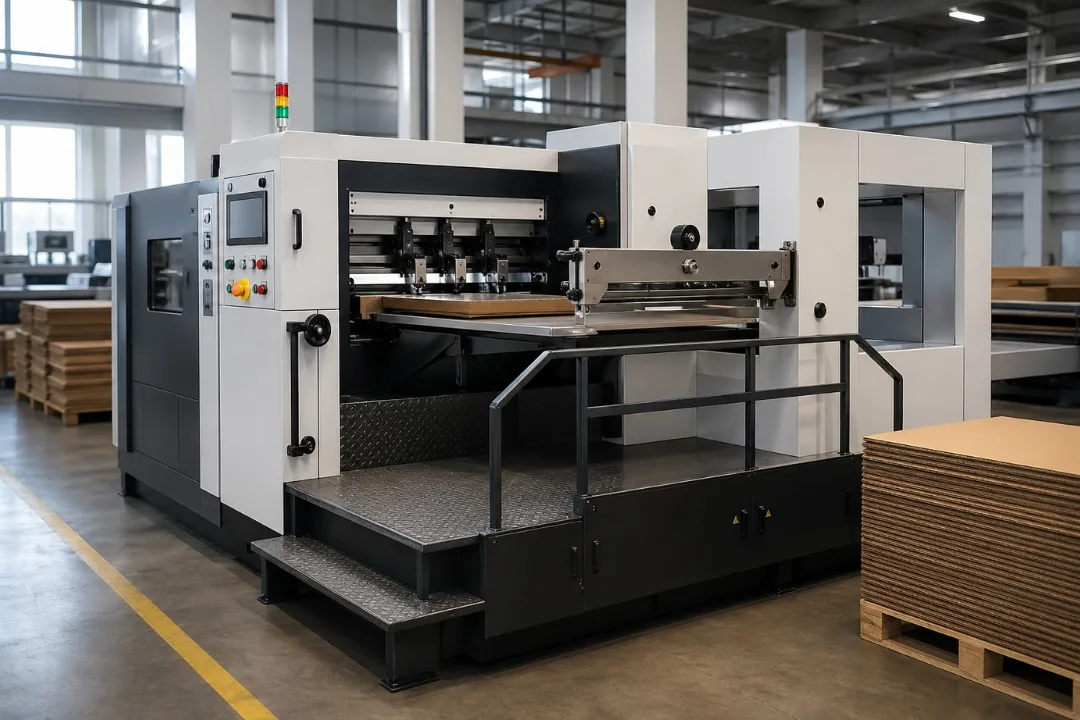
This is where most of the price difference comes from. A semi-automatic unit still needs an operator to feed sheets by hand. A fully automatic machine handles feeding, stripping, and waste removal independently.
Higher automation means a bigger upfront number – but also far more output per shift. For a unit running two shifts daily, the productivity difference usually covers the price gap within two years.
2. Cutting Speed and Sheet Format
Machines are rated in sheets per hour. One doing 3,000 sheets/hour costs noticeably less than one rated at 7,000+.
Sheet size matters just as much. Machines handling up to 1060mm cost less than large-format models built for 1300mm, 1500mm, or 1650mm boards. If your work involves big corrugated sheets, you need the larger format – there’s no shortcut around that cost.
3. Which Series or Build Tier
Most manufacturers in India organize their die cutters into tiers. Robus India, for example, runs three:
- Confidence Series – Works well for smaller operations with moderate output needs
- Performance Series – Handles higher speeds and a wider range of materials
- Excellence Series – Built for sustained heavy production and tight precision requirements
Each step up brings better components, tighter tolerances, and a machine that holds up better under consistent load.
4. Add-Ons and Attachments
A base die cutter cuts and creases. Depending on what you make, you may also need:
- A stripping unit to remove waste automatically
- Inline hot foil stamping for premium carton finishing
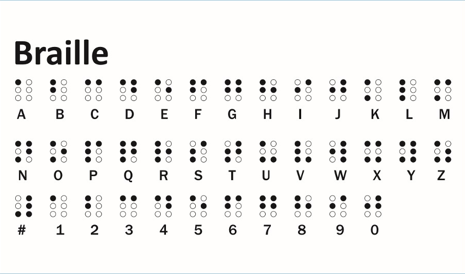
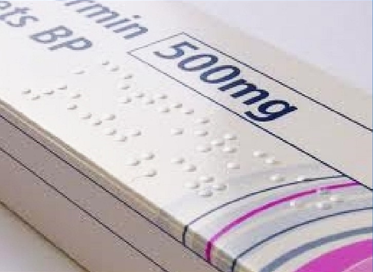
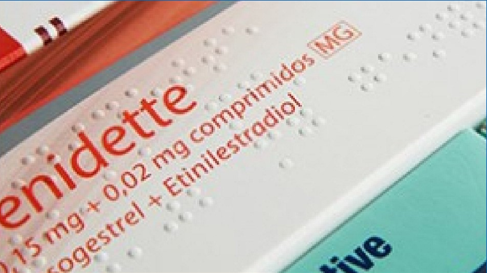
- Braille embossing, which is a regulatory requirement for pharmaceutical cartons
- A feeding table for better ergonomics and throughput
Every attachment adds to the price. The question is whether your product actually requires it – don’t pay for what you won’t use.
5. Indian-Made vs Imported
Indian-manufactured machines from solid companies typically cost 25–40% less than comparable imports. Import duties, freight, and longer lead times push foreign machine costs up considerably.
One Robus India customer pointed out in a testimonial that their machine was around 30% cheaper than alternatives they evaluated, with production capacity about 35% higher and noticeably less material wastage.
6. Service Support and Spare Parts
This gets underestimated almost every time. A cheaper machine with poor after-sales support costs more in the long run, through downtime, sourcing spare parts from abroad, and emergency repair bills. Before you sign anything, ask:
- Is the manufacturer’s service team within reach of your plant?
- Are common spare parts stocked locally?
- What does the warranty actually cover?
Semi-Automatic vs Automatic: Which One Fits You
Running under 50,000 cartons a day? A semi-automatic die-cutting machine gives you solid output without a large capital commitment. You get reliable precision and can upgrade later as volumes grow.
For high-volume corrugated or folding carton work, an automatic die cutter pays off faster. The consistency alone – fewer rejects, less material waste per run – adds up quickly at scale.
How to Buy Without Overpaying
Getting good value isn’t just negotiating the price down. It’s knowing what you’re actually comparing.
Compare specs, not just the sticker price: Two machines priced similarly can have very different speeds, sheet capacities, and component quality. Always ask for full specification sheets before talking numbers.
Ask for a live demo on your material: Any manufacturer worth buying from will run the machine on your actual substrate – or something close to it. If they hesitate, take note.
Look at the total cost of ownership: Electricity draw, maintenance intervals, spare part pricing, and consumables like cutting rules and dies, boards all add up over time. A machine that’s ₹5 lakh cheaper upfront but runs on pricier parts may not actually save you anything.
Ask about payment terms: Many Indian machinery manufacturers offer structured payment options. Some equipment also qualifies under MSME financing schemes – worth asking about before assuming full upfront payment.
Visit a reference installation: Seeing the machine run at an existing customer’s facility is the best check you can do. Robus India maintains a clientele list on their website – you can ask to speak with or visit an existing buyer before committing.
Where the Indian Market Is Heading
India’s packaging sector is growing fast, pushed by e-commerce, pharma exports, and food and beverage demand. More mid-sized printers and converters are upgrading their post-press setups – and domestic manufacturers have kept pace.
The practical benefit for buyers: you no longer need an import budget to get a machine built to solid international standards. Robus India’s corrugated packaging range, for instance, covers everything from semi-automatic die cutters to large-format automatic bottom-feeder models. That means you can grow your capacity within one manufacturer’s ecosystem rather than switching vendors mid-journey.
What to Take Away From All This
The right machine isn’t the cheapest one or the most expensive. It’s the one that fits your actual volumes, your material, your floor space, and your realistic budget for both purchase and ongoing costs.
Get quotes from at least two or three manufacturers. Compare specifications carefully. Don’t skip the service and spare parts conversation – that’s where the real cost difference often hides.
If you’re still mapping out your options, Robus India’s automatic die cutter range at Robus India is worth a look. They’ve been manufacturing and servicing packaging machinery since 2016, with over 410 installations across India.