Live Demo :

ROBUS INDIA at CHINA PRINT 2025 | Discover how we enhance your packaging production with precision and efficiency! | Meet us at Booths: W2-007 (Dayuan), A3-522 (YCIA), E4-001/002 (Xinxing) | 15–19 May 2025 | China International Exhibition Center (Shunyi Hall), Beijing | [email protected] | +91 81783 09461 | www.robusindia.com

Carton Strapping Machine: What It Is and Why It Matters After Die Cutting
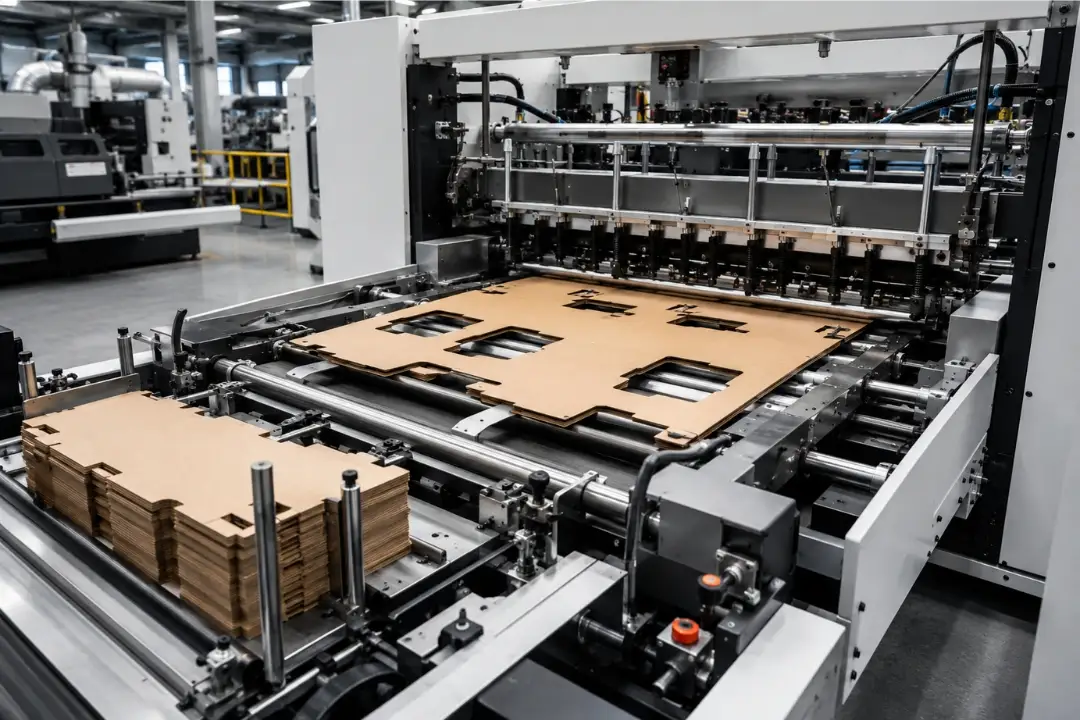
Carton strapping machine processing die-cut corrugated sheets in an automated packaging production facility

Carton Strapping machine – three words that don’t get nearly enough attention in packaging discussions, yet this single piece of equipment can make or break the efficiency of your entire post-press line. If you run a folding carton or corrugated packaging operation, you already know that die cutting is only half the story. What happens right after the cut is where production either moves smoothly or grinds to a halt. This blog covers what a carton Strapping machine actually is, how it fits into the die-cutting workflow, the types available, and why getting this step right matters for output quality, labour costs, and overall line speed.   Carton Strapping Machine: The Step Most Converters Underestimate To understand why Strapping matters, you first need to picture what a sheet looks like right after it exits a die cutter. The press has done its job – cuts and creases are in place. But the sheet is still one connected piece. The finished carton blanks are surrounded by waste material: the outer edge trim, inner cut-outs (like hand holes or window openings), and the gaps between individual blanks on the sheet. None of that excess board removes itself. That’s exactly what a carton Strapping machine is built to do. It separates the usable carton blanks from all the surrounding waste material in a controlled, repeatable way – either mechanically, automatically, or through a combination of both – so the blanks can move cleanly to the next stage: folding, gluing, or packing. Without this step being handled properly, you end up with: Torn or damaged blanks caused by manual handling Inconsistent waste removal that slows downstream operations Jams and stoppages on your folder-gluer Higher labour costs from manual Strapping teams   How the Die-Cutting Process Creates the Need for Strapping When a die-cutting press processes a sheet of paperboard or corrugated board, the steel rule die cuts through the material to define the exact shape of the carton. It also scores fold lines and may perforate tabs or tear strips. But the sheet stays in one piece after the cut. The cuts are clean, but the waste and the blanks are still connected – held together by small uncut sections called “nicks” that keep the sheet from falling apart prematurely inside the press. Once the sheet exits the delivery section of the die cutter, those nicks need to be broken and the waste needs to be cleared before the blank can be used. This is where Strapping comes in as a distinct production stage. In post-press packaging operations, Strapping is defined as the mechanical or manual removal of waste sections from a die-cut sheet, leaving only the finished blanks. It sits between die cutting and blanking/collecting, and it directly determines how clean and ready those blanks are for the next machine.   Types of Carton Strapping Machines Not every packaging operation requires the same Strapping setup. The right choice depends on your run volumes, board types, carton complexity, and how automated your overall line is. 1. Manual Strapping Tables The simplest approach. Operators stack die-cut sheets and use hand tools or by-hand pressure to push out waste sections. This works for short runs and complex shapes, but it’s slow, inconsistent, and physically demanding. It’s also the biggest bottleneck in high-volume production. 2. Semi-Automatic Strapping Machines These use a combination of mechanical tooling and operator input. The machine handles the primary Strapping motion while an operator feeds sheets and monitors quality. A good middle-ground option for medium-volume converters who haven’t yet justified a fully automatic line. 3. Automatic Inline Strapping Machines These are installed directly after the die cutter and handle waste removal without operator intervention. The sheet passes through Strapping pins, rubber ejectors, or rotary tools that push out waste sections in one continuous motion. These machines operate at speeds that match the output of the die cutter, keeping the line moving without creating a Strapping bottleneck. 4. Automatic Strapping with Blanking Combined Some machines combine Strapping and blanking into a single unit. After the waste is removed, the individual blanks are separated and stacked in neat piles. This integrated approach is common on high-speed folding carton lines where floor space and cycle time are tight.   What Strapping Tools Actually Look Like Inside the Machine Understanding the tooling helps you appreciate why setup time and tool quality matter so much. A Strapping tool is essentially a board – similar in layout to the die board – fitted with: Male pins or punches positioned over waste areas that push the unwanted sections downward Female boards underneath with corresponding openings that receive the waste as it’s ejected Rubber ejectors on the die itself that help release the sheet cleanly after each press cycle The male and female boards have to be precisely matched to the die layout. Any misalignment leads to torn blanks, incomplete waste removal, or tool damage. This is why proper makeready – setting up your Strapping tools correctly before the run – is just as important as the machine itself. According to folding carton converting best practices, the pre-makeready team should have all Strapping and blanking tooling ready before the current press job finishes. Waiting until the press is idle to begin tooling setup wastes press time – one of the most expensive resources in a converting plant.   Why Strapping Quality Directly Affects Folder-Gluer Performance Here’s something that doesn’t get discussed enough: the condition of your blanks coming off the Strapping stage has a direct impact on how your folder-gluer runs. If waste removal is incomplete, torn, or inconsistent, you’ll see: Misfeeds on the folder-gluer infeed section caused by blanks with attached waste flaps Glue contamination from waste pieces entering the gluing section Jamming and downtime when irregular blanks interrupt the folding sequence Increased operator intervention to clear blanks that aren’t folding cleanly A well-configured carton Strapping machine delivers blanks that are clean, consistent, and dimensionally correct. That’s what a high-speed folder-gluer needs to run at its rated speed without … Read more

Die-Cutting Machine: Top Features to Look for Before Buying

Die-Cutting Machine - Robus India

A die-cutting machine is a key investment for packaging and printing businesses that work with folding cartons and corrugated boxes. The right machine improves cutting accuracy, production speed, material use, and overall efficiency. If you choose the wrong one, you may face more downtime, uneven quality, and higher long-term costs. When buying a machine, it’s important to look beyond just the price. Understanding which features matter most will help you make a smart investment that benefits you over time. Die-Cutting Machine: Why the Right Features Matter The die-cutting machine is the most important part of the packaging process. Its performance affects every step that follows, from shaping cartons to ensuring creases are perfect. Key reasons why features matter include: Consistent output quality for premium packaging Reduced paperboard and corrugated waste Higher production efficiency Lower maintenance and operational disruptions Selecting a machine with the right setup helps keep operations running smoothly as production increases. Type of Die-Cutting Machine (Manual, Semi-Automatic, Automatic) Understanding machine types is the first step in decision-making. Manual die-cutting machines Suitable for low-volume or sample production It requires more manual labor compared to other methods. Semi-automatic machines Balance between cost and efficiency Well-suited for medium-sized packaging operations Automatic die-cutting machines Designed for high-speed, large-volume production Minimal manual intervention and higher consistency For growing packaging companies, using an automatic die-cutting machine can increase productivity and reduce costs over time. Cutting Precision and Consistency Precision is essential in carton and packaging work. Even minor errors can affect how the box looks after it is folded, glued, and finished. Look for features that support: Uniform pressure distribution Stable cutting platforms The equipment delivers consistent accuracy, even during long production runs. When packaging is made with high precision, the edges are clean, the creases are accurate, and the overall quality is better. Material Compatibility and Application Range A good carton die-cutting machine should be able to cut through a variety of materials without losing performance. Common materials include: Paperboard and duplex board Corrugated sheets Laminated and printed boards Flexible machines help manufacturers handle diverse applications and serve more packaging markets without requiring additional equipment. Production Speed and Output Capacity Speed can help improve delivery times and boost profits. However, going faster is not always better if it leads to lower quality. When evaluating speed: Check sheets-per-hour ratings Ensure speed stability at higher loads Adjust the output to maintain both capacity and cutting accuracy. An industrial die-cutting machine must remain accurate even at high speeds. Machine Build Quality and Durability Build quality indicates how well a machine will perform and how long it will last. Important aspects include: The frame is built to be strong and durable. The moving parts are designed for accuracy and reliability. The machine runs smoothly with minimal vibration. A solid structure helps ensure more consistent cutting and can also reduce long-term maintenance costs. Ease of Operation and Automation Features Today’s packaging units need machines that are simple to operate and quick to set up. Key usability features include: Easy-to-use control panels Quick job changeovers Automatic feeding and stripping options Automation lowers the need for operators, cuts down on errors, and makes production run more smoothly. Safety Features and Compliance When choosing packaging die-cutting equipment, it is important to consider operator safety. Essential safety features include: Emergency stop systems Safety guards and sensors Compliance with industrial safety standards A safer machine keeps people safe and helps prevent production delays. After-Sales Support and Service Availability Even the best machines need help with service. Reliable after-sales service keeps operations running smoothly. Consider: Installation and commissioning support Operator training Availability of spare parts and technical assistance A dependable local service can help you avoid downtime and protect your investment. Total Cost of Ownership (Not Just Machine Price) The purchase price is only one part of the investment. Evaluate: Energy efficiency Maintenance and spare part costs Machine lifespan and resale value Spending a bit more at the start can help reduce operating costs and improve your return on investment in the long run. Conclusion If your packaging company wants to grow and keep quality high, choosing the right die-cutting machine is key.  Focus on accuracy, durability, automation, safety, and long-term costs to make a smart investment that supports efficiency and profits. Checking these features closely will help your machine stay useful as your production needs change.   Frequently asked questions 1. What is the difference between a manual and an automatic die-cutting machine? Manual machines require more operator involvement and are suited to low-volume work, while automatic machines offer higher speed, consistent quality, and greater efficiency for large-scale packaging production. 2. How do I choose the right die-cutting machine for carton packaging? Consider your production volume, the materials you need, the machine’s level of automation, and the after-sales support available. These factors help ensure the machine is right for your business. 3. What maintenance is required for an industrial die-cutting machine? To keep equipment working well over time, make sure to lubricate it regularly, check cutting parts often, replace worn parts promptly, and properly train operators.

Looking for a Braille Machine with Standard Marburg Medium?

Kindly fill out the form below to request more information.