
Live Demo :

ROBUS INDIA at CHINA PRINT 2025 | Discover how we enhance your packaging production with precision and efficiency! | Meet us at Booths: W2-007 (Dayuan), A3-522 (YCIA), E4-001/002 (Xinxing) | 15–19 May 2025 | China International Exhibition Center (Shunyi Hall), Beijing | info@robusindia.com | +91 81783 09461 | www.robusindia.com

How Robus India Customers Increased Output by 35% Without Expanding Their Factory Space
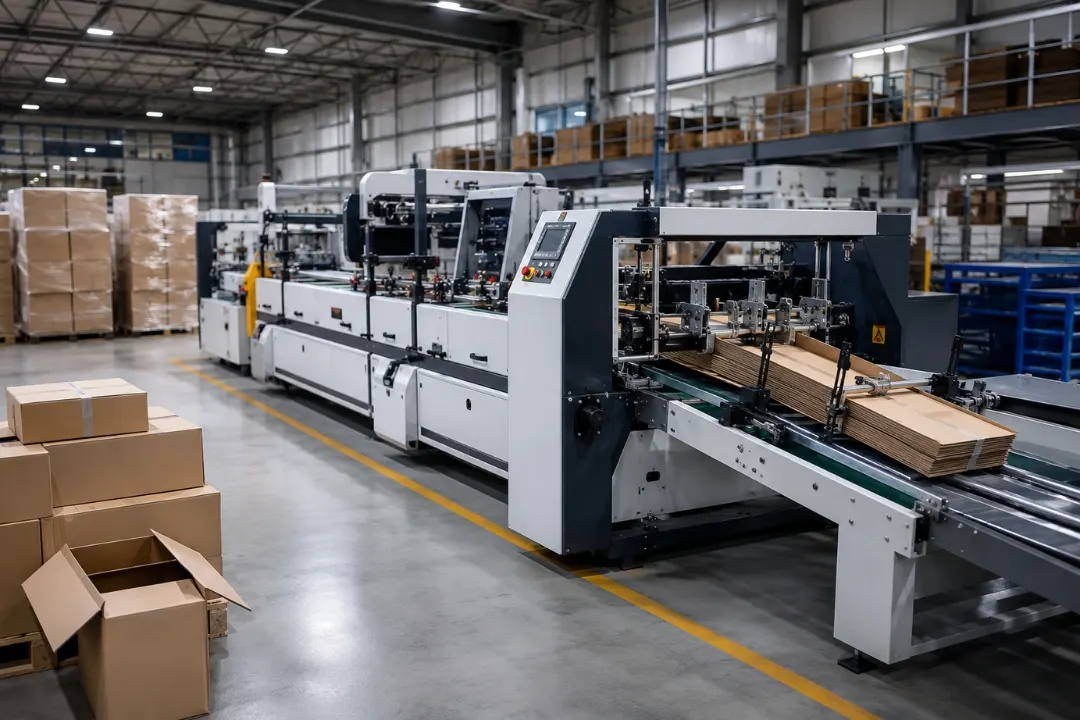
Increase packaging output with Robus India automatic folder gluer machine operating in a modern packaging manufacturing facility.

When Rohan Kaicker, Marketing Director at Cliffton Packagings, was evaluating new machinery, he wasn’t looking for a dramatic change. He was looking for something reliable and cost-effective. What he got was a 35% increase in packaging output – without touching a single wall of his factory. “It is cheaper by around 30% and offers production capacity by more than ~35% with low wastage,” he said after installing a Robus India Automatic Folder Gluer. For Indian packaging manufacturers who need more output but can’t afford to expand, that result is worth understanding properly.   Why Most Factories Can’t Increase Packaging Output the Way They’re Trying The instinct is predictable: more output means more space. A bigger plant, another production line, a night shift. These options exist, but they’re expensive, slow to implement, and often unnecessary. Most packaging lines are not running at their actual capacity. They’re running at the capacity their weakest point allows – and that weakest point is rarely the square footage. It’s usually the machine. For folding carton and corrugated box manufacturers, the bottleneck is typically in the folder-gluer line. Manual feeding, inconsistent gluing, and slow job changeovers all cut into what the machine could theoretically produce in an eight-hour shift. Fix those three things, and packaging output goes up – on the same floor, with the same team.   What Robus India Machines Do Differently Robus India manufactures folder gluers, die cutters, flute laminators, and hot foil stampers for folding carton and corrugated packaging lines. Established in 2016 and based in Greater Noida, they have installed over 410 machines across India. Here’s where their automatic folder gluers change the numbers: Consistent Speed, Not Burst Speed A line that hits 200 cartons per minute for 20 minutes, then stalls for a manual feeding correction, produces less than a line running 140 cartons per minute without interruption. Robus India’s automatic feeding and stacking system removes the start-stop pattern that kills effective hourly output on semi-automatic setups. Glue Precision Reduces Rejections Every rejected carton is a production slot that generated nothing saleable. Robus India’s gluing units apply adhesive at consistent pressure and temperature across the full run. Fewer rejects means the machine’s rated speed converts more directly into finished product – which is how you increase packaging output without running the line any faster. Faster Changeovers Add Hidden Hours Switching between carton sizes or box styles on an older machine can take two to four hours. On Robus India machines, that process is significantly shorter. For manufacturers handling multiple clients with different SKU requirements, reclaimed changeover time is effectively free production capacity.   The Floor Space Reality Robus India’s automatic line consolidates what previously required multiple stations into one integrated machine. A pre-upgrade setup often looks like this: Manual feeding table – 1 operator Semi-automatic folder gluer – 1 to 2 operators Manual stacking and banding – 1 to 2 operators After switching to a Robus India automatic folder gluer, most plants run the same process with one operator. The footprint shrinks. The headcount drops. The output rises. That combination – smaller footprint, fewer people, higher throughput – is exactly how Cliffton Packagings increased packaging output by 35% without expanding their facility.   What the Numbers Look Like Robus India machines are priced approximately 30% below comparable imported alternatives, based on Cliffton Packagings’ own evaluation. Combined with the output improvement, the payback period for most customers lands between 18 and 36 months – faster for operations that were previously turning away orders or running overtime to meet demand. Across the packaging equipment industry, the shift from semi-automatic to fully automatic folder gluers consistently delivers 25 to 50% output gains, depending on the baseline. Robus India customers tend to land at the higher end of that range because the machines are designed around Indian production conditions – variable power supply, mixed operator skill levels, and the need for straightforward maintenance without specialized on-site engineers.   Signs Your Line Has an Output Problem, Not a Space Problem Before committing to a facility expansion, check whether any of these apply: You’re running one shift but still missing delivery deadlines Glue rejection rates are above 2 to 3% per run Job changeovers regularly take longer than 90 minutes You’re quoting customers longer lead times than your order volume justifies Operators are managing three or four manual steps per carton These are machine efficiency problems. More floor space won’t solve them.   What Customers Report After 12 Months Jayesh Patel, MD of Kalhar Packaging, noted that the Robus India machine runs with “almost no sound and vibration.” That matters because vibration causes folding misalignment over long runs – one of the most common sources of quality inconsistency on budget machines. Installation is also straightforward. Robus India’s team handles commissioning and operator training on-site, which reduces the risk of a new machine sitting idle while the plant figures out setup independently.   The Right Question to Ask First Before looking at new buildings or additional shifts, the better question is: what is your current line capable of, and what is actually preventing it from running at that level? For most folding carton and corrugated manufacturers in India, the answer is in the folder gluer. A machine that feeds automatically, glues precisely, and changes over quickly will increase packaging output on the same floor it’s already standing on. Cliffton Packagings found that out. So did Kalhar Packaging. So have over 400 other manufacturers across India who chose Robus India.
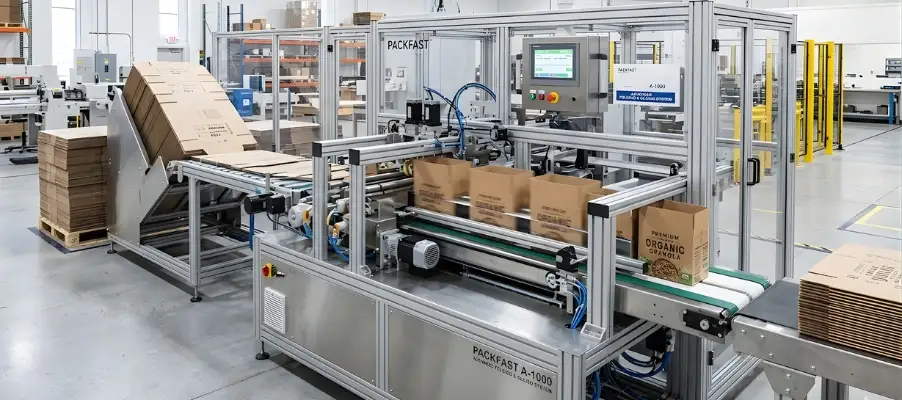
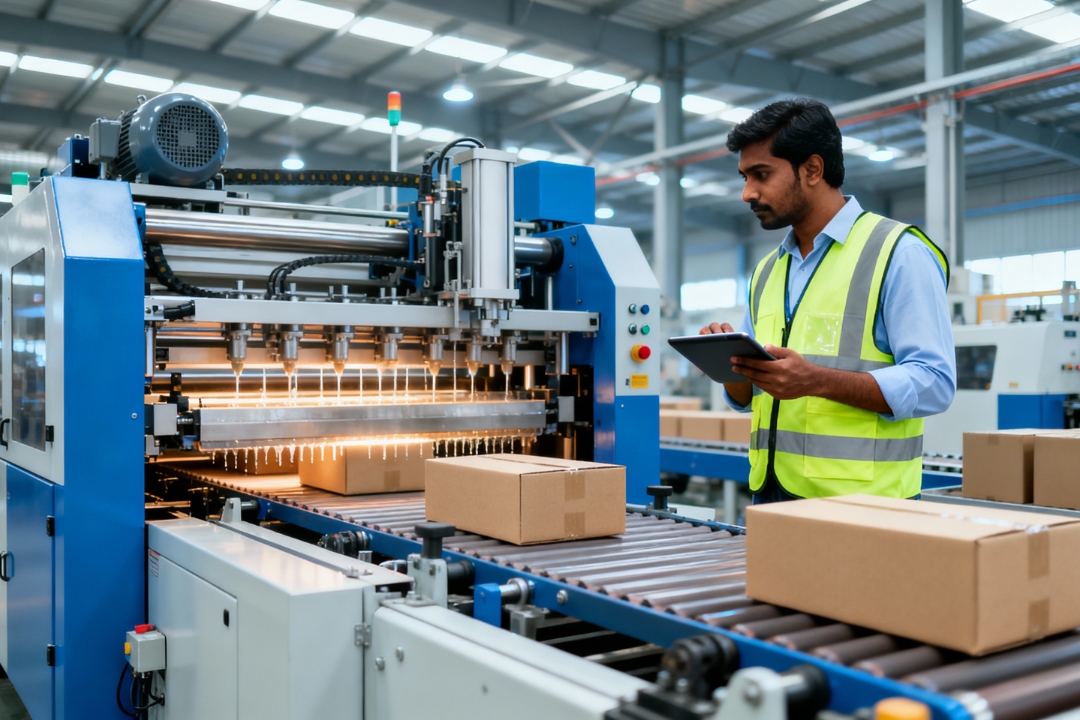
Carton Box Making Machine: How It Improves Efficiency in the Modern Packaging Industry

Carton Box Making Machine - Robus India

In today’s fast-moving packaging industry, speed, precision, and consistency are non-negotiable. Whether you’re producing pharmaceutical cartons, e-commerce boxes, or food packaging, manual processes can’t keep up with modern demand. A carton box making machine automates the entire carton production process – from die cutting and folding to gluing and finishing – helping Indian manufacturers reduce waste, increase output, and stay competitive.   What Is a Carton Box Making Machine? A carton box-making machine is industrial equipment that converts flat sheets of paperboard or corrugated material into finished carton boxes. It handles multiple production stages in one continuous, automated workflow. Modern machines cover: Cutting and creasing – Shaping the board to exact dimensions Folding – Bending along pre-scored lines for a clean, precise box form Gluing – Applying adhesive to seal flaps firmly and consistently Finishing – Lamination, hot foil stamping, or Braille embossing where required The result is a high-speed, low-waste production line that a small team can operate with minimal supervision.   How Carton Box Making Machines Improve Packaging Efficiency   1. Dramatically Higher Production Speed Manual carton assembly is slow and inconsistent. A modern automatic folder gluer machine can process hundreds of cartons per minute, compared to a fraction of that output from a manual team. For manufacturers handling large orders – pharma, FMCG, food and beverage – this speed difference directly impacts profitability and delivery timelines.   2. Consistent Quality Across Every Box Human error during folding, glueing, or cutting results in rejects and rework. Automated carton machines use servo-controlled systems to ensure: Uniform crease depth on every sheet Precise glue application with zero overflow Consistent dimensional accuracy across thousands of boxes Less rework means lower material waste and higher throughput.   3. Reduced Labour Dependency One of the biggest operational challenges for Indian packaging businesses is labour availability and cost. A single automatic carton box making machine typically requires just one to two operators, replacing a team of five to ten manual workers. This isn’t just a cost saving – it also reduces production disruptions caused by absenteeism or labour shortages.   4. Versatility Across Box Types and Industries Modern machines handle a wide range of carton formats without lengthy changeovers: Folding cartons for pharma and cosmetics Corrugated shipping boxes for e-commerce Rigid boxes for premium packaging Braille-embossed cartons for pharmaceutical compliance Quick-change tooling and touchscreen controls mean you can switch between box sizes and styles in minutes – not hours.   5. Lower Material Waste Precision cutting and creasing systems minimise offcuts and board damage. Servo-controlled feeding ensures accurate sheet positioning in every cycle, significantly reducing the scrap rate compared to semi-automatic or manual methods. For high-volume operations, even a 2–3% reduction in material waste translates into substantial annual savings.   Types of Carton Box Making Machines Used in India Choosing the right machine depends on your production volume, box type, and level of automation required: Machine Type Best For Automation Level Automatic Folder Gluer Folding cartons – pharma, FMCG, cosmetics Fully automatic Automatic Die Cutter Custom shapes, windows, and perforations Fully automatic Flute Laminator Corrugated cartons with printed top sheets Fully automatic Film Lamination Machine Surface finishing – gloss, matte, soft-touch Fully automatic Semi-Auto Die Cutter Smaller runs, corrugated boxes Semi-automatic Hot Foil Stamper Premium packaging with foil branding Fully automatic If you’re a mid-size Indian packaging company producing 500,000+ cartons per month, a fully automatic folder gluer paired with a die cutter covers most of your production needs.   Industries in India Benefiting the Most Carton box making machines are transforming packaging operations across several high-growth Indian sectors: Pharmaceuticals – high-volume folding cartons with Braille compliance (mandatory under Indian drug regulations) E-commerce and Q-commerce – fast-turnaround corrugated boxes for platforms like Flipkart, Amazon, and Blinkit fulfilment centres Food and beverage – FSSAI-compliant printed cartons for retail shelves Cosmetics and personal care – premium rigid boxes and foil-stamped folding cartons Consumer electronics – sturdy corrugated cartons for device packaging   What to Look for When Buying a Carton Box Making Machine in India Before investing, evaluate the following: Production speed – Sheets per hour at your required box size. Maximum sheet size – Ensure it covers your largest carton format. Servo vs mechanical drive – Servo-controlled machines offer higher precision and lower energy consumption. After-sales support – Local service engineers matter more than price; downtime is expensive. Spare parts availability – Confirm parts are stocked in India, not imported on long lead times. Installation and training – A reputable manufacturer will handle site assessment, commissioning, and operator training.   Why Indian Manufacturers Are Upgrading Now India’s packaging industry is projected to grow significantly over the next five years, driven by pharmaceutical exports, the e-commerce boom, and stricter quality standards for food and drug packaging. Manufacturers who invest in automated carton box-making machinery now are positioning themselves to: Handle larger orders without proportionally increasing headcount Meet tighter quality standards demanded by large buyers and exporters Reduce per-unit production costs as volume scales The shift from semi-automatic to fully automatic machinery is no longer a luxury – it’s a competitive necessity for Indian packaging businesses that want to grow.   Frequently Asked Questions   What is the price of a carton box-making machine in India?  Pricing varies based on machine type and automation level. Entry-level semi-automatic die cutters start at a lower investment, while fully automatic folder gluers and die cutters with servo controls are priced higher. Contact a manufacturer directly for an accurate quote based on your specific box dimensions and production volume.   Which carton box making machine is best for a pharma packaging company?  Pharmaceutical manufacturers typically need an automatic folder gluer with inline Braille embossing capability, combined with a high-speed die cutter. This covers folding carton production with the regulatory compliance Indian pharma packaging requires.   How long does installation take?  For most automatic carton machines, installation and commissioning take 3 to 7 days, including operator training. A quality manufacturer will send their own engineers to your facility.   Robus India … Read more

How to Choose the Right Folder Gluer Machine for Your Packaging Business

Folder Gluer Machine - Robus India

In the packaging industry, a company’s speed and consistency in production play a big role in staying competitive. For carton packaging makers, choosing the right Folder Gluer Machine is one of the most important decisions.  The right equipment improves workflow, cuts down on manual errors, and supports business growth. Understand Your Packaging Requirements Start by figuring out your main production needs. Check what types of boxes you make, like straight-line cartons, crash-lock boxes, or other specific styles. Make sure the folder-gluer you pick works with the materials you use, such as carton board or corrugated board. Knowing the size of your production is important. Smaller and medium-sized packaging operations often value flexibility, while larger plants usually look for fast, automated packaging machines. Key Features to Look for in a Folder-Gluer A good folder gluer machine should include features that support your business goals. Here are some key points to consider: The machine should be fast and capable of handling the required production volume. It should support various folding and gluing methods. The controls should be easy to use and quick to learn. The machine should work with different types of glue, like cold glue and hot melt. The folding systems should help maintain the cartons’ quality. These qualities help you make boxes that are always high quality, no matter what product they hold. Build Quality and Durability Good construction quality plays a big role in how a machine performs over time. Choose one with strong parts, a sturdy frame, and accurate mechanical pieces. In folder gluer systems, well-made rollers, guide rails, and motors tend to last longer and need less maintenance. To keep a production environment efficient and safe, it is important to have safety features, protective covers, and dependable emergency-stop mechanisms. Technology, Precision, and Automation Smart automation makes today’s packaging lines run more smoothly. If you are selecting a folder-gluer, consider the following: Choose machines with digital controls, touchscreens, and preset functions. Check whether the machine has sensors that can align parts and automatically detect errors. Make sure the machine folds and glues accurately to help reduce rejected products. Automation helps keep processes consistent, cuts down on manual work, and makes it easier to track how things are going. Compatibility with Your Workflow Before buying a machine, check that it fits into your current production setup. Consider the following: Available floor space Ways to integrate with printing, die-cutting, and packing systems Ways to customize carton sizes or use special packaging A reliable carton folding machine should help you work more efficiently, not add to your workload. Cost, Maintenance, and After-Sales Support When you buy a folder-gluer, you are making a long-term investment. Consider the total cost of ownership, not just the initial price. Keep in mind: Regular maintenance needs. Check if spare parts are easy to find when needed. Find out if the manufacturer offers technical support and training. If you choose a well-known company, you’ll likely get better service, correct paperwork, and help from trained technicians when you need it. Final Tips for a Better Decision To make a confident purchase: Pick two or three models and compare their features, cost, and durability. Go to the manufacturer’s factory to see a live demo. Talk to people who already use the product to get honest feedback. Trusted manufacturers of folding and gluing solutions usually provide options for customization and ongoing support. This can make your investment more worthwhile.   FAQs 1. What is a Folder Gluer Machine used for? In packaging plants, a folder-gluer machine folds and glues flat cartons into boxes that are ready for packing. This equipment automates, standardizes, and improves efficiency in production. 2. What maintenance does a folder-gluer require? Regularly clean, lubricate moving parts, check belts and rollers, and calibrate glue systems. Sticking to a maintenance schedule helps machines last longer and reduces downtime. 3. What is the price of a folder gluer machine in India? Prices can vary widely based on size, automation level, and features. Basic models usually start at mid-range prices, while more advanced automated machines are much more expensive. Manufacturers usually give custom quotes to match your specific needs.

Looking for a Braille Machine with Standard Marburg Medium?

Kindly fill out the form below to request more information.