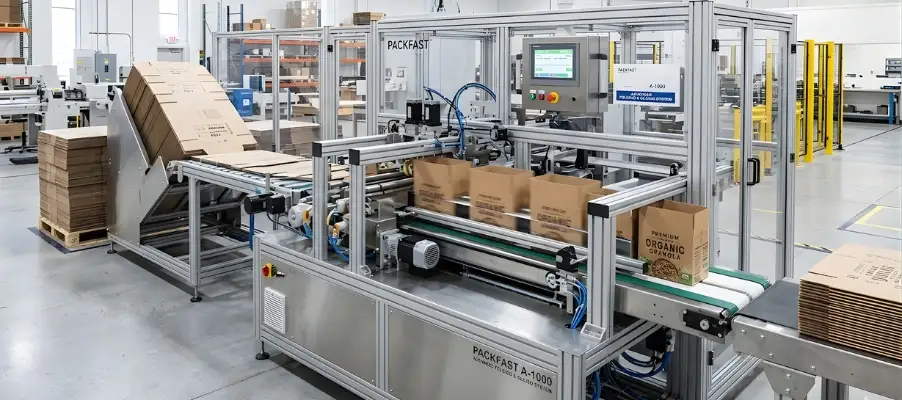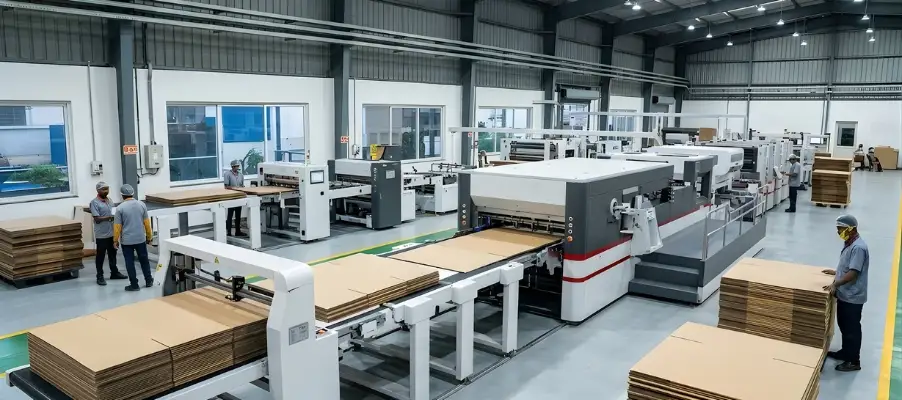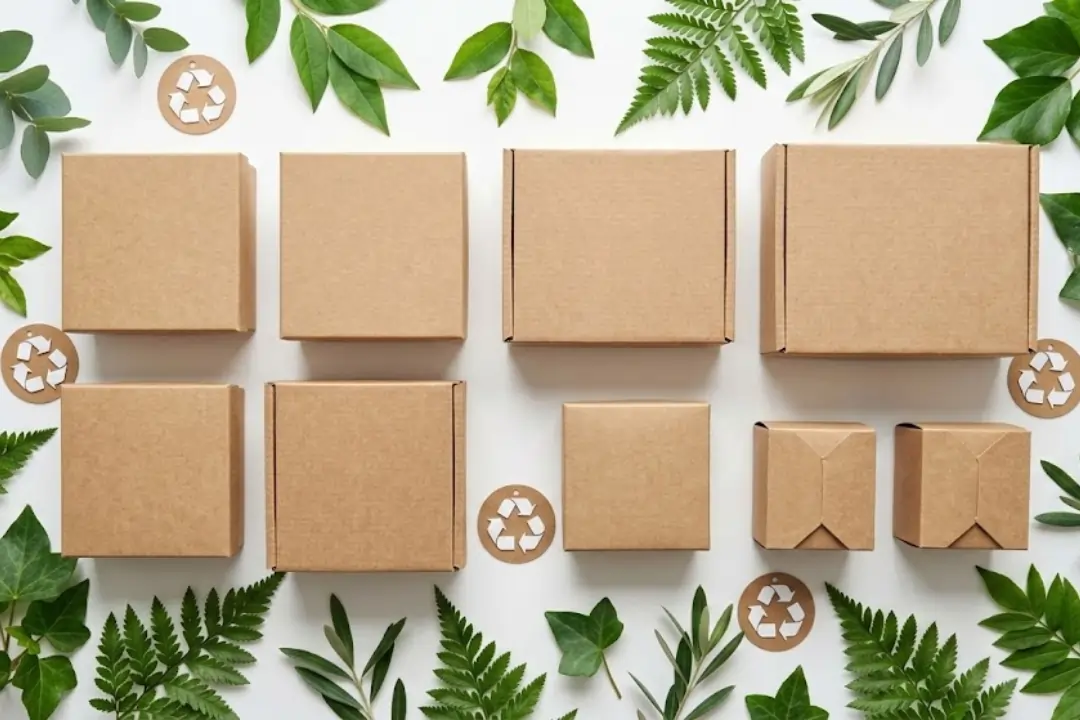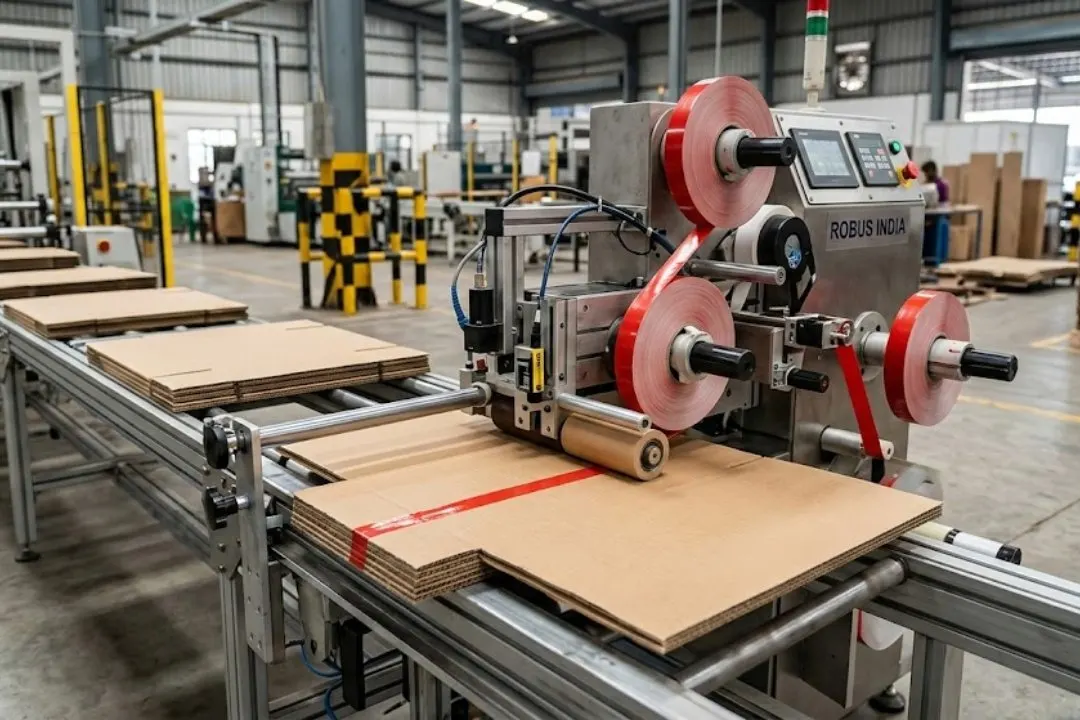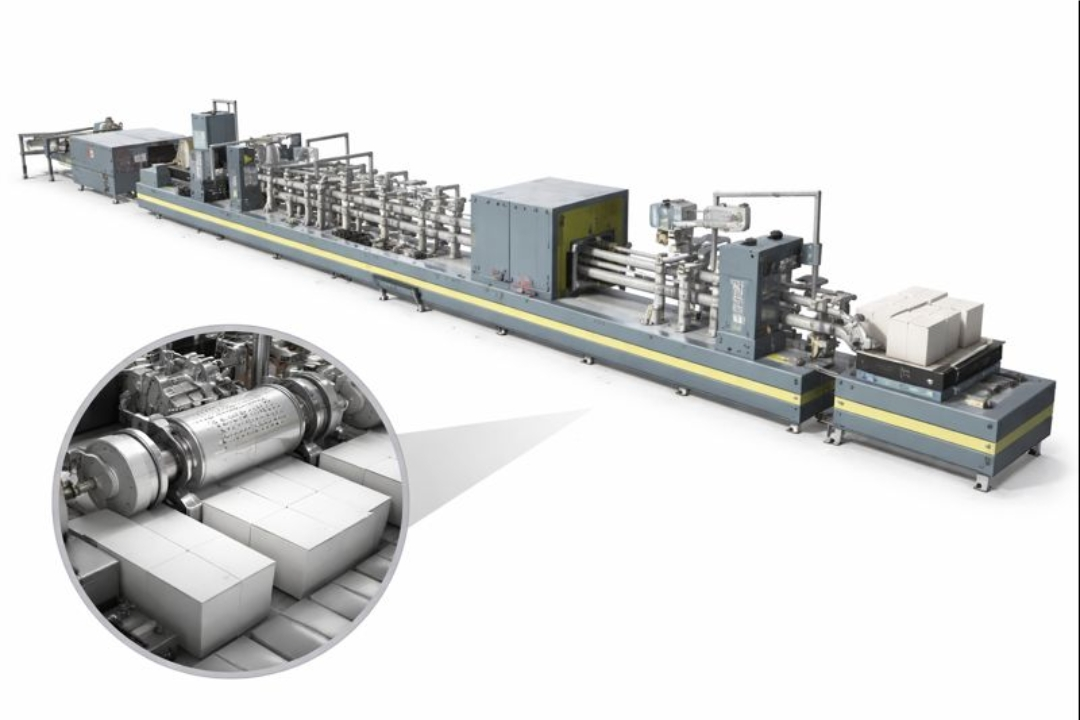
Live Demo :

ROBUS INDIA at CHINA PRINT 2025 | Discover how we enhance your packaging production with precision and efficiency! | Meet us at Booths: W2-007 (Dayuan), A3-522 (YCIA), E4-001/002 (Xinxing) | 15–19 May 2025 | China International Exhibition Center (Shunyi Hall), Beijing | [email protected] | +91 81783 09461 | www.robusindia.com

Packaging Industry in India: Growth and Future Scope

Packaging Industry in India - Robus India

The Packaging Industry in India is currently the fifth-largest sector of the Indian economy, acting as a critical backbone for the country’s manufacturing and retail sectors. As we move through 2026, the industry is witnessing an unprecedented shift from simple containment to technology-enabled, sustainable solutions. Driven by a surge in e-commerce, a booming pharmaceutical sector, and a shift toward organized retail, this industry is projected to reach a staggering market value of over $140 billion by 2029. This growth is not just about volume; it is about the high-tech transition within the folding carton and corrugated industries.   What is the current state of the Packaging Industry in India? The packaging industry in India is growing at a rapid annual rate of roughly 22% to 25%. At present, the market holds a valuation of approximately $86 billion, surpassing Japan to secure its position as the third-largest packaging market globally. Sector Dominance: Food and beverage packaging accounts for nearly 45% of the market share, followed closely by pharmaceuticals and personal care.   Segment Growth: While plastic remains a major material, paper-based packaging, including folding cartons and corrugated boxes, is growing at a 12% CAGR, driven by environmental regulations.   FDI & Infrastructure: With 100% Foreign Direct Investment (FDI) allowed under the automatic route, global players are increasingly setting up manufacturing hubs in India.   Key Drivers Powering the Future of Indian Packaging Several socioeconomic factors are pushing the demand for advanced packaging solutions to new heights. E-commerce & Q-commerce Explosion: The “Quick-commerce” model (10–30 minute deliveries) requires specialized, secondary packaging like corrugated mini-shippers and tamper-evident boxes.   Sustainability Mandates: New government regulations, such as Extended Producer Responsibility (EPR), are forcing brands to move toward 100% recyclable materials.   Rising Disposable Income: A growing middle class is opting for packaged and processed foods, which require high-barrier, aseptic, and visually appealing carton packaging.   Why is Automation the Future Scope of Packaging? As demand scales, manual processes are no longer viable. The future scope of the industry lies in high-speed, automated post-press machinery. Automated solutions like the Excellence Series folder gluers and high-precision die-cutting machines allow manufacturers to: Increase Output: Modern machines can handle thousands of sheets per hour, meeting the bulk requirements of FMCG giants.   Enhance Precision: Features like inline Braille embossing and rotary inspection ensure that pharmaceutical packaging meets global safety standards.   Reduce Wastage: Smart sensors and servo-controlled systems minimize substrate waste, significantly boosting the manufacturer’s ROI.   How is Robus India Shaping the Future of Carton Packaging? Since 2016, Robus India has been at the forefront of providing advanced machines for carton packaging. Operating from a high-tech facility in Greater Noida, the company has completed over 410 installations. Innovative Range: From the high-speed 3-ply flute laminators to the specialized Trio Press die-cutting machines, Robus India caters to both folding carton and corrugated industries.   Localized Solutions: Understanding the Indian market, they provide machines that are roughly 30% more cost-effective than international counterparts without compromising on speed or durability.   End-to-End Support: Beyond selling machinery, they offer expert consultation, seamless installation, and a professional engineering service to ensure maximum machine uptime.   Conclusion The Indian packaging landscape is evolving from a commodity-driven market to a technology-driven powerhouse. With the push for “Make in India” and a global shift toward sustainable paper packaging, the growth potential is limitless. The only way for businesses to stay competitive in this fast-paced economy is to invest in high-performance automation as they grow.   Frequently Asked Questions (FAQs) 1. What is the growth rate of the packaging industry in India? The industry is growing at an impressive rate of 22% to 25% annually. It is currently the 5th largest sector in India and is expected to grow significantly due to e-commerce and pharmaceutical demand.   2. Why is carton packaging becoming more popular than plastic? Consumer awareness and government mandates like EPR are driving the shift. Paper-based carton packaging is better for the environment because it breaks down naturally, is easier to recycle, and has great branding potential because it can be printed on in high quality.   3. How does automation help small-scale packaging units? Automation allows smaller units to achieve consistent quality, reduce labor costs, and take on larger orders that require high precision and fast turnaround times, helping them compete with larger players.

Best Cardboard Box Making Machine Manufacturers in India

Best Cardboard Box Making Machine - Robus India

Cardboard Box Making Machine Manufacturers are the primary drivers of India’s industrial growth, supporting everything from retail to heavy electronics. As global brands shift their manufacturing bases to India, the demand for high-strength, precision-engineered packaging has skyrocketed. For a local business, the choice of machinery determines whether they can fulfill high-volume contracts or struggle with production bottlenecks and high rejection rates. Modern packaging is no longer just about protection; it is about branding and efficiency. High-speed automation is now the standard.  Manufacturers who invest in the right technology can offer their clients faster turnaround times, lower costs, and superior box finish. This article dives into why local machinery is winning the market and what features you should prioritize for your facility.   Why Choose Cardboard Box Making Machine Manufacturers in India? Cardboard Box Making Machine Manufacturers are the driving force behind India’s industrial self-reliance, especially in the packaging sector. As consumer expectations for “unboxing experiences” rise, the pressure on manufacturers to deliver flawless, high-strength cartons has never been greater.  For businesses in Greater Noida and across India, the shift toward smart automation isn’t just a luxury-it’s a survival strategy. Choosing a local manufacturer allows you to tap into world-class technology without the logistical headaches of international imports. The right partner provides not just a machine, but a long-term service ecosystem.  This guide explores the leading features of top-tier Indian machinery and how they are redefining the standards of the corrugated and folding carton industries.   Why Choose Cardboard Box Making Machine Manufacturers in India? Choosing Cardboard Box Making Machine Manufacturers based in India, such as Robus India, offers unique benefits that global competitors often struggle to match. Significant Cost Savings: Purchasing locally can reduce your capital investment by nearly 30% compared to European brands.   Immediate Engineering Support: Robus India’s Greater Noida headquarters ensures that service engineers can reach local units within hours.   Built for Local Substrates: Indian machines are specifically engineered to handle the varying humidity and paper grades common in South Asian markets.   Ready Spare Parts: You no longer have to wait weeks for a single sensor to clear customs; local inventory keeps your lines running.   Proven Reliability: With over 410 successful installations, Robus India has established a reputation for machines that run 24/7 with zero vibration.   Which is the Best Automatic Machine for Corrugated Box Making? For those looking to maximize their factory’s output, the Excellence Series by Robus India is widely considered the gold standard for high-speed production. High-Speed Folder Gluers: These machines can reach speeds of 350-400 meters per minute, allowing you to fulfill massive e-commerce orders.   Automatic Die Cutters: Robus’s “Trio Press” models offer precision stripping and blanking, ensuring clean edges for every carton.   Boxstream Innovation: The newly launched Boxstream machine is a game-changer for smaller, intricate e-commerce and beverage boxes.   Flute Laminators: Achieve perfect bonding for 3-ply and 5-ply boards with servo-controlled alignment systems.   Luxury Features: For premium branding, look for machines with Inline Braille and Hot Foil Stamping attachments.   Top Features to Look for in Industrial Box Making Machinery When comparing carton packaging machines in India, technical specifications will determine your long-term return on investment. Servo-Driven Accuracy: This technology ensures millimeter-precision in every fold, reducing material rejection by up to 20%.   Modular retrofitting: Choose machines that let you add attachments, like 4- and 6-corner units, as your business grows.   User-Friendly HMI: A digital touch-screen interface makes it easy for your staff to switch between box sizes in under 15 minutes.   Durability: A heavy-duty frame is essential for maintaining stability at high speeds, a feature prioritized in the Robus Performance Series.   Quality Sensors: Integrated cameras can automatically eject boxes with misaligned glue lines, protecting your brand’s reputation.   How Do Modern Machines Improve Packaging ROI? Upgrading to an automated line from Robus India is a strategic move that addresses the three biggest drains on a packaging plant’s profit: labor, waste, and time. Labor Reduction: Modern machines like the Boxstream can reduce labor requirements on a single line from 60 people to just five.   Increased Capacity: Automation allows your facility to increase production by approximately 35% to 70% without expanding your physical footprint.   Zero Waste Goals: Precision feeding and alignment systems minimize “fish-tailing” and other common defects in corrugated boxes.   Global Competitiveness: With professional-grade finishing, your boxes will meet the strict standards required for export to European and American markets.   Sustainable Operation: Modern inverter-driven motors significantly lower electricity consumption compared to older, manual equipment.   Conclusion The future of Indian packaging lies in high-tech automation and reliable local support. By partnering with leading Cardboard Box Making Machine Manufacturers like Robus India, you gain access to the same precision used by global e-commerce giants.  Whether you need an Automatic Die Cutter for heavy-duty cartons or an Automatic Folder Gluer for pharmaceutical boxes, the choice is clear. Don’t let outdated machinery hold your growth back; invest in local innovation that delivers global results.

Top Mistakes in Folding Carton Packaging and How to Avoid Them

Folding Carton Packaging - Robus India

Folding carton packaging is essential for protecting products, building brands, and improving the customer experience in many fields, including food, pharmaceuticals, FMCG, and retail.  Even minor errors in carton production can result in damaged goods, rejected batches, and increased prices. Many packaging companies in India face the same problems over and over again because they don’t plan, use outdated processes, or don’t understand technology well enough.  This blog discusses the most common mistakes people make with folding carton packaging and how to avoid them. Folding Carton Packaging Mistakes That Cost Time and Money Carton packaging mistakes often occur when production is rushed, testing isn’t done properly, or machines aren’t set up correctly. Finding these mistakes early can help manufacturers make better products, waste less, and maintain consistent quality in large-scale production. Poor Material Selection One of the most common mistakes people make when packing cartons is picking the wrong board material. Using the wrong GSM or board type without considering the product’s weight, moisture exposure, or storage can weaken the carton. Common issues include: Carton deformation during stacking Reduced durability during transportation Higher product damage rates How to avoid it: Choose the board material based on its use, the weather, and its weight limit. Testing the quality of materials before making many of them helps prevent problems. What Happens When Carton Design Is Ignored? Ignoring structural design can create serious problems during folding and gluing. When carton layouts are poorly planned, production can become inefficient, and the packaging may be weak. Design-related mistakes include: Incorrect crease placement Improper glue flap dimensions Tight tolerances affecting folding accuracy Solution: Before making the final product, use CAD-based tools to design the cartons and test prototypes. Planning the design properly makes things more consistent and reduces the need to redo things. Printing & Registration Errors Printing quality directly impacts brand perception. Misalignment, color inconsistency, or smudging can make cartons look unprofessional and lead to customer complaints. Common printing problems: Off-register prints Color mismatch across batches Ink smearing or uneven coverage How to avoid it: Regularly calibrating printing machines and conducting rigorous quality checks ensures consistent results. Keeping the printing area clean also improves the output. Why Is Die-Cutting Accuracy So Important? Die-cutting accuracy affects how well a carton folds and maintains its shape. If the die-cutting isn’t done right, it can make the structure unstable and the finish look bad. Typical die-cutting issues include: Uneven cuts Burr edges Misaligned creases Solution: Use precision die-cutting machines and maintain cutting tools regularly. Accurate die-cutting improves folding efficiency and carton strength. Ignoring Folder Gluer Settings Another major problem in making folding cartons is incorrectly setting up the folder gluer. If you set the wrong speed, glue, or pressure, the cartons can get weak. Problems caused by poor settings: Weak glue bonding Carton opening during transit Lower production efficiency How to avoid it: Ensure each carton type is set up correctly and that operators are trained to verify glue accuracy during production. How Can Packaging Manufacturers Avoid These Mistakes? Preventing errors is more cost-effective than fixing them later. Best practices include: Investing in modern packaging machinery in India Regular operator training Standardized quality control checklists Testing cartons before mass production Taking a proactive approach reduces production losses and improves the overall quality of the packaging. Why Choosing the Right Packaging Machinery Matters Advanced machinery is crucial for reducing mistakes in folding carton packaging. Modern machines are more accurate, automated, and consistent than older or manual systems. Key benefits include: Higher production speed Improved accuracy Reduced material wastage Long-term cost savings For Indian manufacturers of carton packaging, the right machines ensure consistent production and growth. Conclusion Many mistakes occur when folding cartons, but you can avoid them all with the right approach.  Choosing the right materials, designing the packaging correctly, die-cutting it accurately, and properly setting the machines all make a big difference in the packaging’s quality.  Businesses can produce high-quality, durable cartons that protect products and build brand trust by hiring skilled workers and investing in advanced machinery. FAQs What is the most common mistake in folding carton packaging? Poor material selection is one of the most common mistakes, often resulting in weak cartons and higher rejection rates. How can folding carton packaging quality be improved? Using the right board material, ensuring the carton is the right size, calibrating the machines regularly, and conducting strict quality checks can all help improve things. Why do folding cartons fail during transportation? Weak materials, poor gluing, or incorrect die-cutting are the most common causes of carton failures. Which machines help reduce folding carton packaging errors? Die-cutting machines, folder gluers, and laminators are essential for improving accuracy and reducing packaging mistakes.

Understanding Braille Embossing in Packaging: A Complete Guide

Braille Embossing - Robus India

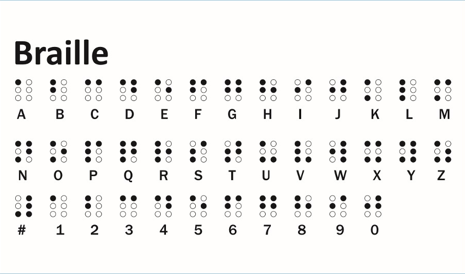
Braille Embossing helps visually impaired consumers identify products safely and independently. Everyday items like snacks, medicines, or cosmetics become easier to use. Even small businesses can implement it without much difficulty. This guide explains its importance, techniques, benefits, and tips for inclusive packaging. What is Braille Embossing in Packaging? Braille embossing is the process of creating raised dots on product packaging that represent Braille letters. These tactile dots let visually impaired people read important information by touch. Some common details included in Braille are: Product name Ingredients or contents Usage instructions Expiration dates Even though it might sound technical, the idea is simple: provide information that people with visual impairments can read. Adding Braille isn’t just about following regulations-it shows that your brand cares about inclusivity and all customers. It also makes the user experience better and packaging more thoughtful. Why Braille Embossing Matters Adding Braille to packaging isn’t just about accessibility-it’s about empowerment and safety: Empowers consumers to make decisions on their own Improves safety with clear instructions and accurate information Builds brand credibility by showing responsibility and inclusivity Many countries now legally require Braille on certain products, like medicines, food, and cosmetics. Following these rules not only ensures compliance but also builds trust with consumers. In today’s market, accessibility can also increase customer loyalty. Techniques of Braille Embossing There are several ways to add Braille to packaging, depending on your product, material, and budget: Heat Embossing (Thermoforming): Uses heat and pressure to create raised dots. Works well on flexible materials like plastic or foil. Offset Embossing: Combines printing and embossing, usually for cardboard or paper packaging. Digital Embossing: A high-tech method that allows precise, customizable Braille on many types of packaging. Beginners can start with simpler methods and explore advanced techniques later. Choosing the right method is important to make sure Braille is durable and readable. Benefits of Braille Embossing in Packaging Adding Braille has many advantages: Enhanced accessibility: Visually impaired consumers can use products independently Improved brand loyalty: Shows your company cares about inclusivity and social responsibility Regulatory compliance: Helps meet packaging laws locally and internationally Safety and accuracy: Reduces mistakes in product usage or consumption Besides these, Braille also communicates that your brand values ethical practices and cares for all customers, which strengthens your brand image. Tips for Beginners If you’re just starting, the process can feel overwhelming. Some practical tips: Place Braille in visible areas: Near product name or important instructions so it’s easy to find Check dot size and spacing: Proper sizing ensures tactile readability Choose the right materials: Make sure your packaging works with the embossing method you pick Test with real users: Ask visually impaired people to read the Braille to confirm it’s accurate Quick Beginner Checklist: Pick the embossing method that suits your packaging Keep placement consistent across products Verify readability before mass production What Information to Include in Braille Include the most essential details: Product name and brand Ingredients or key contents Usage instructions and expiration dates Providing this info makes products safer and easier to use for visually impaired consumers. It also shows your commitment to accessibility. Common Misconceptions About Braille Some myths still exist: “Braille is too expensive.” Modern technology has made it affordable for most products. “It’s only for visually impaired people.” It also improves your brand image and shows social responsibility. “It’s difficult to implement.” With some guidance, even beginners can add Braille without major problems. Knowing these helps brands adopt Braille confidently and effectively. Conclusion Braille embossing isn’t just a legal requirement-it’s a way to make packaging inclusive, ethical, and responsible. Proper implementation empowers visually impaired consumers while improving safety, usability, and trust. Beginners can start with basic techniques, focus on correct placement, and test readability to make it work smoothly. With careful planning, Braille embossing turns packaging into a tool that benefits both your customers and your brand.

Essential Maintenance Tips to Extend the Life of Packaging Machines

Packaging Machines

Packaging machines are very important in modern manufacturing, especially for making cartons, corrugated boxes, and post-printed materials. These machines directly affect productivity, output quality, and delivery times.  They can do things like die cutting, folder gluing, lamination, and finishing. But even the best industrial packaging machines can break down or not work as well as they should if they aren’t properly maintained.  A disciplined approach to maintenance not only reduces downtime but also extends machine life, makes them safer, and protects your investment. This guide offers useful maintenance tips based on real-world experience, designed for production environments.   Packaging Machines Require Preventive, Not Reactive Maintenance One of the most expensive mistakes manufacturers make is waiting until something breaks down before doing something. The goal of preventive maintenance is to find problems before they cause operational issues. Unplanned stoppages often lead to: Missed delivery commitments Increased scrap and rework Higher repair and replacement costs Preventive maintenance keeps packaging machines running smoothly and helps maintenance teams plan downtime, rather than dealing with emergencies.   Follow a Structured Daily, Weekly, and Monthly Maintenance Routine A well-defined maintenance schedule ensures nothing is overlooked and responsibilities are clear. Daily checks should include: Look for any loose parts or unusual noises during your inspection. Clean away dust, paper fibers, and any sticky residue you find. Check that lubrication levels are where they should be.   Weekly tasks may involve: Check the belts and chains, and make sure the feeder is properly aligned. Clean the glue systems and sensors thoroughly. Test all safety mechanisms to ensure they work correctly.   Monthly inspections should focus on: Electrical connections and control panels. Inspect wear parts, including rollers and bearings. Perform calibration and alignment checks. Documenting these actions helps identify recurring issues and supports compliance audits.   Keep Machines Clean to Avoid Hidden Wear and Failures Many people overlook the importance of cleanliness in industrial packaging. When debris builds up, it can accelerate equipment wear and reduce accuracy. Regular cleaning is especially important for: Dust affects the accuracy of cutting on die-cutting machines. Glue buildup on folder gluers can affect bond quality. Lamination machines, where leftover material can hurt rollers. A clean machine runs more smoothly, uses less energy, and maintains the quality of its output.   Use Manufacturer-Recommended Spare Parts and Lubricants Using spare parts that don’t fit or aren’t of good quality may seem like a good idea, but they often make things break down faster and put your safety at risk. Best practices include: Using genuine or manufacturer-approved spare parts Following recommended lubrication types and intervals Replacing worn components before they fail completely This method keeps important parts safe and makes sure that your packaging machines work as they should.   Train Operators to Identify Early Warning Signs Operators work with machines every day and are often the first to notice small changes. With the right training, they become a powerful tool for prevention. Common early warning signs include: Unusual noise or vibration Inconsistent feeding or alignment Glue application irregularities Sensor errors or repeated stoppages When operators report problems right away, small issues can be fixed before they become bigger.   Schedule Professional Servicing and Machine Health Audits Professional inspections add significant value, even when companies have strong practices in place. Technicians with experience can spot problems that daily operators can’t. Professional servicing typically covers: Precision calibration and alignment Performance benchmarking Software and control system checks Periodic checks of machine health help determine whether parts need to be repaired, replaced, or upgraded, which can extend the life of the equipment as a whole.   Environmental Conditions Matter More Than You Think Packaging machines are highly sensitive to the conditions under which they operate. Bad conditions can shorten parts’ lifespans and make them less accurate. Key factors to control include: Temperature and humidity levels Stable electrical supply and grounding Floor vibration and adequate spacing Maintaining the right conditions protects electronics, mechanical parts, and the finished product’s quality.   Digital Maintenance Tracking Improves Consistency Using digital logs and maintenance checklists helps people stay accountable and reduces the need to rely on memory. Benefits include: Automated reminders for servicing Clear maintenance history for audits Better coordination between teams Even basic digital tracking makes it much easier to keep up with preventive maintenance.   Conclusion To make packaging machines last longer, you don’t need to do complicated things. You just need to be consistent, disciplined, and knowledgeable. Structured routines, trained operators, real parts, and professional servicing all work together to reduce downtime and improve reliability.  Businesses get more work done, more predictable performance, and lower long-term costs when they view maintenance as a strategic investment rather than an operational burden. Well-maintained machines help build customer trust and drive long-term growth.   Frequently Asked Questions How often should packaging machines be serviced? Most industrial packaging machines work better when they are checked daily, inspected weekly, and serviced by a professional every 3 to 6 months, depending on how much they are used.   What is the most common cause of packaging machine breakdowns? Not doing preventive maintenance, allowing dust or glue residue to accumulate, and waiting too long to replace worn parts are all common causes of failure.   Can regular maintenance really extend machine life? Yes. Consistent maintenance can add several productive years to a machine’s lifecycle while reducing repair costs and unplanned downtime.

Automatic vs Semi-Automatic Packaging Machines: Which Is Right for You?

Automatic Packaging Machines - Robus India

Automatic Packaging Machines are changing the way modern packaging units work by making them faster, more consistent, and more efficient. Still, every business has different production needs, budgets, and growth plans. So, choosing between automatic and semi-automatic packaging machines is a strategic decision, not just a technical one. Understanding how these two options differ can help manufacturers ensure their machinery investments align with their long-term business goals.   Automatic Packaging Machines – When Automation Makes Sense Automatic packaging machines perform packaging tasks with minimal manual labor. After setup, they take care of feeding, folding, gluing, and finishing in a steady, ongoing process. These machines are made for high-volume production settings where speed and consistency matter most. Key benefits include: Fast production speeds make it easier to handle large or repeat orders. Consistent quality is maintained throughout long production runs. There is less need for highly skilled manual labor. These systems work well with fully integrated packaging lines. These machines work well when you have a tight production schedule and need to keep downtime to a minimum. Best suited for: High-volume carton and corrugated packaging manufacturers. Businesses serving FMCG, pharmaceutical, or export markets. Operations are looking to increase their production in the future.   Understanding Semi-Automatic Packaging Machines Semi-automatic packaging machines use both automation and human input. For example, tasks such as feeding or aligning are done by hand, while the machine handles the main packaging work. This hybrid approach offers greater flexibility and lower entry costs. Key advantages include: Requires less upfront investment than fully automated systems. Setup is easier and maintenance is simpler. Adapts more easily to different box sizes and small batches. Gives operators more control for custom packaging tasks. Businesses that handle many different orders rather than standardized, high-volume production often prefer semi-automatic solutions. Best suited for: Small to mid-sized packaging units. Companies handling frequent design or size changes. Businesses that are slowly moving toward automation.   Key Differences Between Automatic and Semi-Automatic Machines Although both machine types fulfill the same purpose, their operational impacts differ significantly.   Production speed Automatic machines deliver high output with minimal interruptions. Semi-automatic machines run at moderate speeds, depending on the operator.   Capital investment Automatic systems require higher upfront costs. Semi-automatic machines are more budget-friendly.   Labor involvement Automatic machines significantly reduce manual handling. Semi-automatic machines require trained operators.   Operational flexibility Automatic machines work best when tasks are standardized. Semi-automatic machines can easily adjust to different needs.   Factors to Consider Before Choosing the Right Machine Selecting the right packaging machine depends on operational priorities rather than automation level alone. Key factors to evaluate include: Daily and monthly production volume. The amount of floor space you have and how it is arranged. Your budget limits and what return on investment you expect. Availability of skilled operators. Your plans for expanding and automating in the future. Understanding these factors will help you select a machine that meets your current needs and supports future business growth.   Making the Right Choice for Your Packaging Business In modern packaging operations, both fully automated and partially automated packaging machines are very important.  The best choice depends on how often the machine will be used, how hard the jobs are, and what the business plans to do next. Automation can help manufacturers make things faster, bigger, and more consistently. On the other hand, businesses that value flexibility and controlled investment may find semi-automatic solutions to be more useful.  The key to long-term efficiency is ensuring that machine capabilities align with the operational strategy.   FAQs 1. Are automatic packaging machines suitable for small businesses? Yes, they can be, as long as production volumes are high enough to make the investment worthwhile and you plan to use them regularly.   2. Do semi-automatic machines compromise on packaging quality? No. With proper setup and trained operators, output quality remains high, though production speed may be lower.   3. Which option offers better long-term ROI? ROI is influenced by how much you use the equipment, the size of your production, labor costs, and your growth plans, not just the type of machine you choose.

Die-Cutting Machine: Top Features to Look for Before Buying

Die-Cutting Machine - Robus India

A die-cutting machine is a key investment for packaging and printing businesses that work with folding cartons and corrugated boxes. The right machine improves cutting accuracy, production speed, material use, and overall efficiency. If you choose the wrong one, you may face more downtime, uneven quality, and higher long-term costs. When buying a machine, it’s important to look beyond just the price. Understanding which features matter most will help you make a smart investment that benefits you over time. Die-Cutting Machine: Why the Right Features Matter The die-cutting machine is the most important part of the packaging process. Its performance affects every step that follows, from shaping cartons to ensuring creases are perfect. Key reasons why features matter include: Consistent output quality for premium packaging Reduced paperboard and corrugated waste Higher production efficiency Lower maintenance and operational disruptions Selecting a machine with the right setup helps keep operations running smoothly as production increases. Type of Die-Cutting Machine (Manual, Semi-Automatic, Automatic) Understanding machine types is the first step in decision-making. Manual die-cutting machines Suitable for low-volume or sample production It requires more manual labor compared to other methods. Semi-automatic machines Balance between cost and efficiency Well-suited for medium-sized packaging operations Automatic die-cutting machines Designed for high-speed, large-volume production Minimal manual intervention and higher consistency For growing packaging companies, using an automatic die-cutting machine can increase productivity and reduce costs over time. Cutting Precision and Consistency Precision is essential in carton and packaging work. Even minor errors can affect how the box looks after it is folded, glued, and finished. Look for features that support: Uniform pressure distribution Stable cutting platforms The equipment delivers consistent accuracy, even during long production runs. When packaging is made with high precision, the edges are clean, the creases are accurate, and the overall quality is better. Material Compatibility and Application Range A good carton die-cutting machine should be able to cut through a variety of materials without losing performance. Common materials include: Paperboard and duplex board Corrugated sheets Laminated and printed boards Flexible machines help manufacturers handle diverse applications and serve more packaging markets without requiring additional equipment. Production Speed and Output Capacity Speed can help improve delivery times and boost profits. However, going faster is not always better if it leads to lower quality. When evaluating speed: Check sheets-per-hour ratings Ensure speed stability at higher loads Adjust the output to maintain both capacity and cutting accuracy. An industrial die-cutting machine must remain accurate even at high speeds. Machine Build Quality and Durability Build quality indicates how well a machine will perform and how long it will last. Important aspects include: The frame is built to be strong and durable. The moving parts are designed for accuracy and reliability. The machine runs smoothly with minimal vibration. A solid structure helps ensure more consistent cutting and can also reduce long-term maintenance costs. Ease of Operation and Automation Features Today’s packaging units need machines that are simple to operate and quick to set up. Key usability features include: Easy-to-use control panels Quick job changeovers Automatic feeding and stripping options Automation lowers the need for operators, cuts down on errors, and makes production run more smoothly. Safety Features and Compliance When choosing packaging die-cutting equipment, it is important to consider operator safety. Essential safety features include: Emergency stop systems Safety guards and sensors Compliance with industrial safety standards A safer machine keeps people safe and helps prevent production delays. After-Sales Support and Service Availability Even the best machines need help with service. Reliable after-sales service keeps operations running smoothly. Consider: Installation and commissioning support Operator training Availability of spare parts and technical assistance A dependable local service can help you avoid downtime and protect your investment. Total Cost of Ownership (Not Just Machine Price) The purchase price is only one part of the investment. Evaluate: Energy efficiency Maintenance and spare part costs Machine lifespan and resale value Spending a bit more at the start can help reduce operating costs and improve your return on investment in the long run. Conclusion If your packaging company wants to grow and keep quality high, choosing the right die-cutting machine is key.  Focus on accuracy, durability, automation, safety, and long-term costs to make a smart investment that supports efficiency and profits. Checking these features closely will help your machine stay useful as your production needs change.   Frequently asked questions 1. What is the difference between a manual and an automatic die-cutting machine? Manual machines require more operator involvement and are suited to low-volume work, while automatic machines offer higher speed, consistent quality, and greater efficiency for large-scale packaging production. 2. How do I choose the right die-cutting machine for carton packaging? Consider your production volume, the materials you need, the machine’s level of automation, and the after-sales support available. These factors help ensure the machine is right for your business. 3. What maintenance is required for an industrial die-cutting machine? To keep equipment working well over time, make sure to lubricate it regularly, check cutting parts often, replace worn parts promptly, and properly train operators.

How to Choose the Right Folder Gluer Machine for Your Packaging Business

Folder Gluer Machine - Robus India

In the packaging industry, a company’s speed and consistency in production play a big role in staying competitive. For carton packaging makers, choosing the right Folder Gluer Machine is one of the most important decisions.  The right equipment improves workflow, cuts down on manual errors, and supports business growth. Understand Your Packaging Requirements Start by figuring out your main production needs. Check what types of boxes you make, like straight-line cartons, crash-lock boxes, or other specific styles. Make sure the folder-gluer you pick works with the materials you use, such as carton board or corrugated board. Knowing the size of your production is important. Smaller and medium-sized packaging operations often value flexibility, while larger plants usually look for fast, automated packaging machines. Key Features to Look for in a Folder-Gluer A good folder gluer machine should include features that support your business goals. Here are some key points to consider: The machine should be fast and capable of handling the required production volume. It should support various folding and gluing methods. The controls should be easy to use and quick to learn. The machine should work with different types of glue, like cold glue and hot melt. The folding systems should help maintain the cartons’ quality. These qualities help you make boxes that are always high quality, no matter what product they hold. Build Quality and Durability Good construction quality plays a big role in how a machine performs over time. Choose one with strong parts, a sturdy frame, and accurate mechanical pieces. In folder gluer systems, well-made rollers, guide rails, and motors tend to last longer and need less maintenance. To keep a production environment efficient and safe, it is important to have safety features, protective covers, and dependable emergency-stop mechanisms. Technology, Precision, and Automation Smart automation makes today’s packaging lines run more smoothly. If you are selecting a folder-gluer, consider the following: Choose machines with digital controls, touchscreens, and preset functions. Check whether the machine has sensors that can align parts and automatically detect errors. Make sure the machine folds and glues accurately to help reduce rejected products. Automation helps keep processes consistent, cuts down on manual work, and makes it easier to track how things are going. Compatibility with Your Workflow Before buying a machine, check that it fits into your current production setup. Consider the following: Available floor space Ways to integrate with printing, die-cutting, and packing systems Ways to customize carton sizes or use special packaging A reliable carton folding machine should help you work more efficiently, not add to your workload. Cost, Maintenance, and After-Sales Support When you buy a folder-gluer, you are making a long-term investment. Consider the total cost of ownership, not just the initial price. Keep in mind: Regular maintenance needs. Check if spare parts are easy to find when needed. Find out if the manufacturer offers technical support and training. If you choose a well-known company, you’ll likely get better service, correct paperwork, and help from trained technicians when you need it. Final Tips for a Better Decision To make a confident purchase: Pick two or three models and compare their features, cost, and durability. Go to the manufacturer’s factory to see a live demo. Talk to people who already use the product to get honest feedback. Trusted manufacturers of folding and gluing solutions usually provide options for customization and ongoing support. This can make your investment more worthwhile.   FAQs 1. What is a Folder Gluer Machine used for? In packaging plants, a folder-gluer machine folds and glues flat cartons into boxes that are ready for packing. This equipment automates, standardizes, and improves efficiency in production. 2. What maintenance does a folder-gluer require? Regularly clean, lubricate moving parts, check belts and rollers, and calibrate glue systems. Sticking to a maintenance schedule helps machines last longer and reduces downtime. 3. What is the price of a folder gluer machine in India? Prices can vary widely based on size, automation level, and features. Basic models usually start at mid-range prices, while more advanced automated machines are much more expensive. Manufacturers usually give custom quotes to match your specific needs.

How Automation Is Transforming the Indian Packaging Industry in 2025

Indian Packaging Industry in 2025 - Robus India

The Indian packaging industry is changing faster than ever. As demand from the FMCG, pharmaceutical, and e-commerce sectors grows, manufacturers need packaging solutions that are faster, more accurate, and can grow with them. In 2025, automation will become the main force behind this change. Challenges in the Indian Packaging Industry with Traditional Methods A lot of packaging units still use manual or semi-automatic methods. These methods don’t work anymore because of: Inconsistent folding, gluing, and cutting Slower production rates High labour dependency Frequent errors and wastage Struggles to meet bulk orders As competition intensifies, these limitations make scaling difficult. How Automation Is Transforming the Indian Packaging Industry in 2025 Automation adds speed, accuracy, and operational excellence, which are all necessary for today’s packaging needs. 1. Improved Precision and Quality Automation ensures: Cutting the die correctly Clean creasing Folding in a uniform way Fewer people who say no This boosts consistency across large production runs. 2. Higher Speed and Output Efficiency Automated folder-gluer and lamination machines make it easier for manufacturers to: Increase the number of cartons produced per hour  Finish things on time more easily  Handle designs that are different and complicated  Speed up the time it takes to get things done This is crucial for sectors with high-volume requirements. 3. Stronger and More Attractive Packaging Automation makes products last longer and look better by: Lamination of high quality Precise pasting  Premium finishes like foil stamping  Better visual appeal for retail shelves Brands get better packaging and more visibility on store shelves. 4. Reduced Downtime and Maintenance Costs Most modern automated machines offer: Faster job setup Smart control systems Durable engineering Lower vibration and wear This means fewer breakdowns and production that goes on without stopping. 5. Scalability Without Increasing Workforce Automation helps businesses grow without hiring more people: Fixes problems with not enough workers Makes sure the output is predictable Handles peaks in the seasons Lessens the mistakes made by workers This makes it easy and cheap to scale operations. Why 2025 Is a Turning Point for the Indian Packaging Industry Several things are speeding up the use of automation: Huge growth in online shopping More strict rules for pharmaceutical packaging Growth of the FMCG market More demand for exports Expectations for better packaging quality Automated machines are easier to get in India These trends are reshaping competitiveness across the Indian Packaging Industry. Benefits of Automation for Brands and Packaging Manufacturers Automation makes things run more smoothly and strengthens brand relationships: Quality that stays the same Shorter delivery times Less damage to products while they’re being shipped Fewer complaints and returns Better design for looks and structure More profit and less waste Manufacturers can easily handle more complicated and custom packaging jobs. Conclusion The Indian packaging industry is changing because of automation. Automated machines are now necessary, not just nice to have.  They make things better, faster, and more scalable.  Companies that automate their processes today will set the standard for the market tomorrow.   FAQs 1. Why is automation important for the Indian Packaging Industry in 2025? It speeds up production, cuts down on waste, improves quality, and helps packaging units keep up with the growing demand from e-commerce, FMCG, and pharma brands. 2. Which packaging processes improve the most with automation? Processes like die-cutting, folding, gluing, lamination, and finishing get the most out of it because they are more accurate and make fewer mistakes. 3. Is automation cost-effective for packaging manufacturers? Yes. Automation costs more at first, but it saves money in the long run by lowering labour costs, waste, downtime, and rework.

The Growing Demand for Rigid Boxes in India’s E-Commerce Market

India’s E-Commerce Market - Robus India

India’s E-Commerce Market has radically changed over the past ten years and has changed the shopping behavior of consumers as well as brand operations. Packaging has become a major component of online success with increasing customer demands and stiff competition. Rigid boxes are among other types of packaging that are recording a massive demand as brands seek to provide not only protection but also high value. Why Rigid Boxes Are Becoming Popular in E-Commerce Luxury retail stores do not have exclusive rights to rigid boxes anymore. Nowadays, they are a popular online brand packaging option because of its strength, high quality feel, and flexibility in customisation. Premium Unboxing Experience Packaging is now viewed by customers as a continuation of the brand. Rigid box packaging: Enhances the unboxing experience Creates a premium and memorable impression Helps brands position themselves as high-quality or luxury   Superior Protection During Transit The distribution of products in India takes long routes and several points of handling. Rigid boxes provide: High structural integrity. High impact, moisture, and compression protection. Lowered returns due to damage to the product.   Wide Customisation Options Custom rigid boxes can be easily designed to show the identity of the brands. Popular features include: High-quality printing and branding Magnetic closures and sleeves Window cut-outs, textured finishes, and foil stamping Custom shapes and sizes for niche products   Industry Segments Driving High Demand Some of the product lines within the Indian e-commerce market are sensitive and brand positioning related, thus requiring inflexible packaging. Electronics & Gadgets Smart wearables, accessories, and mobile phones utilize rigid boxes due to the demand of high-quality packaging and product security by the customers. Beauty, Cosmetics & Personal Care The emerging D2C beauty brands are biased towards luxury packaging solutions that enable them to develop a robust online presence and increase product perception. Fashion, Apparel & Accessories Rigid boxes offer an elegant presentation for: Jewellery Watches Premium apparel Fashion accessories Gourmet Food, Bakery & Premium FMCG The presentation of hampers and high-quality foodstuffs may need hard and good-looking packaging, and rigid boxes can be an excellent option to choose. Impact on Brand Perception and Customer Loyalty Customers, in online retailing, tend to judge a brand by the appearance and feel of the products as they are received. Brands benefit by using rigid box packaging: Be distinguished in a competitive online environment. Improve customer trust Encourage repeat purchases Develop unboxing trends on social-media. One well-created box can have effects on the conversations and recommendations made by customers toward a brand. Sustainability Trends Shaping Rigid Box Manufacturing Today consumers are increasingly aware of their environmental preferences and brands are being driven toward more environmentally friendly packaging. Manufacturers are retaliating with: Recycled grey board and kraft-based rigid boxes Reusable premium boxes Reduced plastic components Eco-friendly coatings and inks This is boosting the demand for rigid boxes in the e-commerce market of India. How Indian Manufacturers Are Meeting This Demand India has emerged as a large centre of manufacturing rigid boxes of high quality. With the help of modern production devices, printing technology, and carton packaging machines in India, nowadays manufacturers are able to fulfill bulk e-commerce orders by quality and volume. Leading rigid box manufacturers offer: Bulk and short-run manufacturing D2C brand packaging solutions Faster delivery timelines Critical finishing using superior equipment This is efficiency and innovation that is driving the increase in rigid packaging in industries. Conclusion Due to the fact that the e-commerce market in India is still growing, the importance of quality packaging cannot be overestimated. The rigid box is becoming the most preferred option that serves as a brand that is durable, has high quality, and a good brand image. Rigid box packaging will continue to expand as more electronics, beauty, fashion, and gourmet segments are demanded as well as the development in manufacturing. Flexible box brands that want to be differentiated and offer a superior customer experience will remain in the use of rigid boxes as a key element in their packaging strategy.

Looking for a Braille Machine with Standard Marburg Medium?

Kindly fill out the form below to request more information.